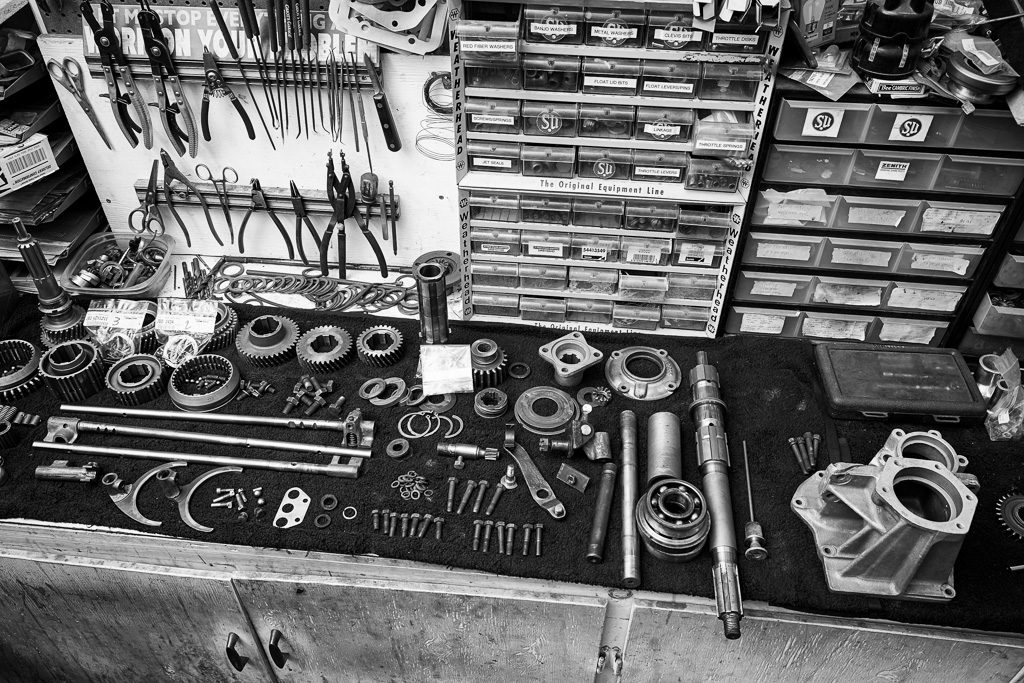
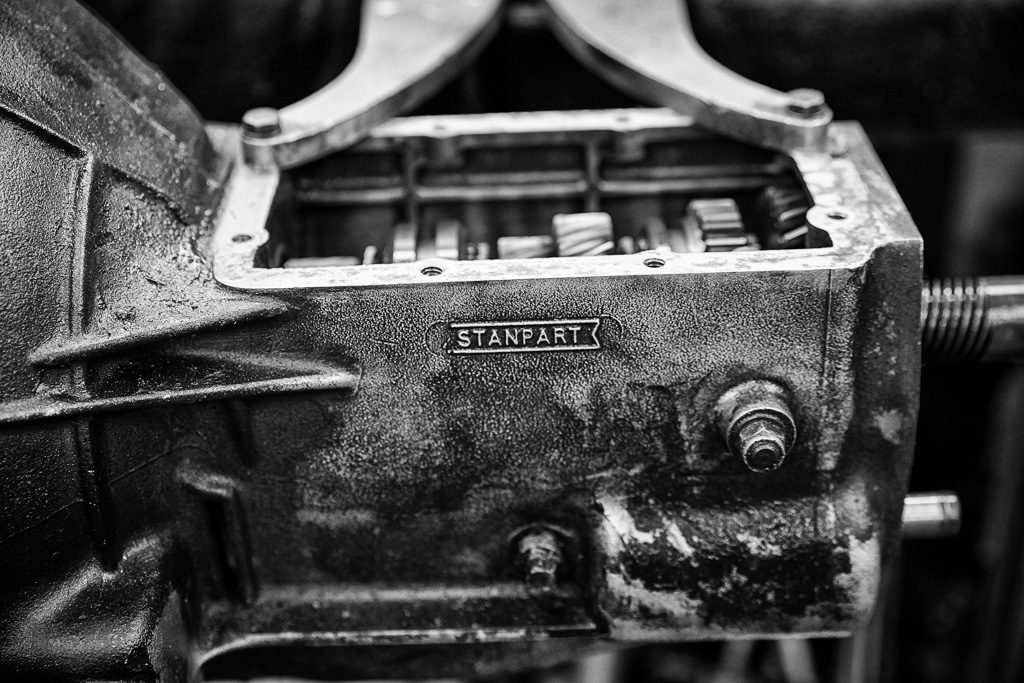
Here is an interesting comparison of British gearbox reverse idlers (the gear you engage when shifting into reverse). The gear on the left is from Triumph TR3B thru TR6 late. The center gear is Austin Healey four speed gearboxes. The gear on the right is full syncro Jaguar E Type. The Jag tremendously overbuilt, it looks like it could be Kenworth. These boxes are extremely difficult to break. The earlier Moss gearboxes fitted to XK cars and Morgan are very similar construction.
How to Drive Your Laycock Overdrive Equipped Car
It is a mystery to many British car enthusiasts driving their Laycock equipped overdrive cars, how to properly engage and disengage the overdrive function with the least trauma to the car. A rule of thumb that I subscribe to, is to treat the overdrive function as an additional gear when upshifting. That means when accelerating up to freeway speeds and you are in fourth gear direct drive, depress the clutch prior to engaging overdrive for cruise, treating it as an additional normal gear, much like the gearchange from third to fourth. That eliminates the “kick in the butt” feeling experienced when engaging 450 PSI of operating pressure without clutch engagement and your foot on the throttle. You need to lower your engine revs by 400-500 RPM’s for smooth engagement. A depressed clutch and minimal to no throttle will accomplish this. Conversely, when downshifting from fourth gear overdrive to fourth gear direct, it is necessary to increase your engine revs approximately 400-500 RPM’s to match engine revs with road speed. The Austin Healey cars accomplished this through the kick-down switch located on the bulkhead that made it necessary to “blip” the throttle for electric disengagement of the overdrive to occur, thereby increasing engine revs to match road speed. Triumph and Jaguar equipped cars do not have this function, but disengagement of overdrive with the electric switch, coupled with a manual throttle blip with your foot and a depressed clutch, will increase the engine rev’s sufficiently to allow a smooth transition to direct drive to match road speed. This habit of overdrive engagement/disengagement will extend the life of your OD clutch linings, as well as allowing the use of your overdrive to cause the least amount of stress to your British (or other Laycock equipped) car. Smooth is good.
Auto Restoration-The Cost of Doing Things/Materials
I recently conducted a tech session for the local Seattle area Triumph club explaining the processes of performing a full, bare metal respray of a collector car. I closed the tech session with a comparison of the cost of paint materials consumed in the refinishing of three separate project cars.
First, was a Triumph TR3A, the victim of a minor traffic mishap. The front shroud and left front fender was reshaped by another local shop run by a friend of mine. Britsport was hired to flat and surface work/prime the repair areas, then blend the color and clearcoat the entire car. Total cost of all paint materials including primers/basecoat/clearcoat was $615 to the customer.
Second, was the Austin Healey 3000 depicted in “Current Projects”. It was a full body strip of all coatings, and after the required metal work, full build up and flatting of the body, then the application of a PPG base/clear system with a seal coat under the base. The total cost of all paint materials consumed for the project including etch primers, high build primer surfacer, as well as the final application of the base/clear, was $1917 to the customer.
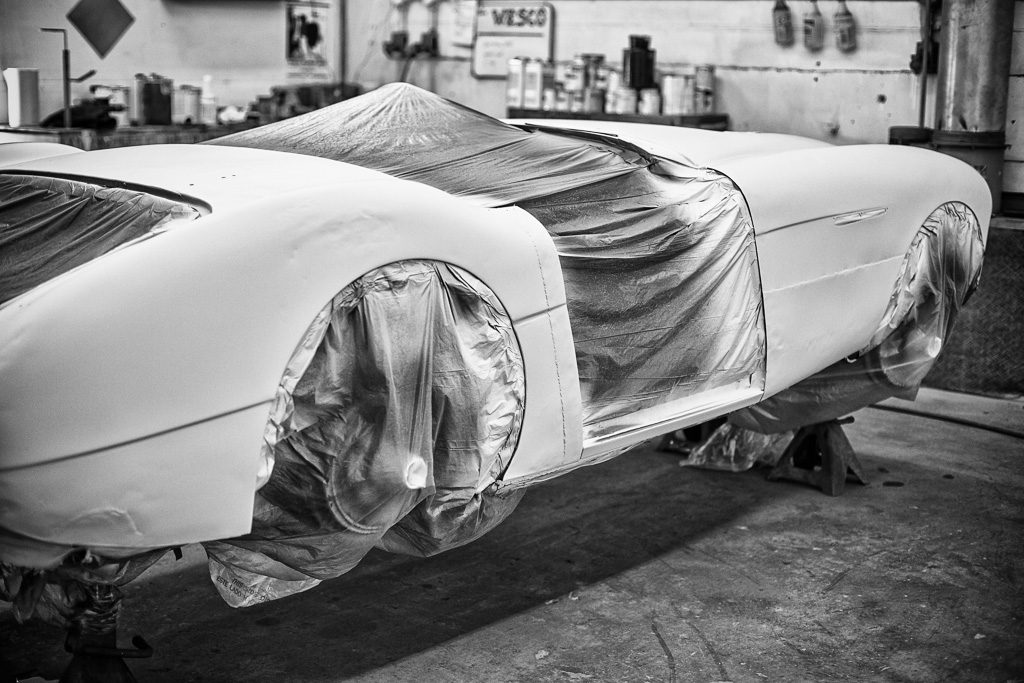
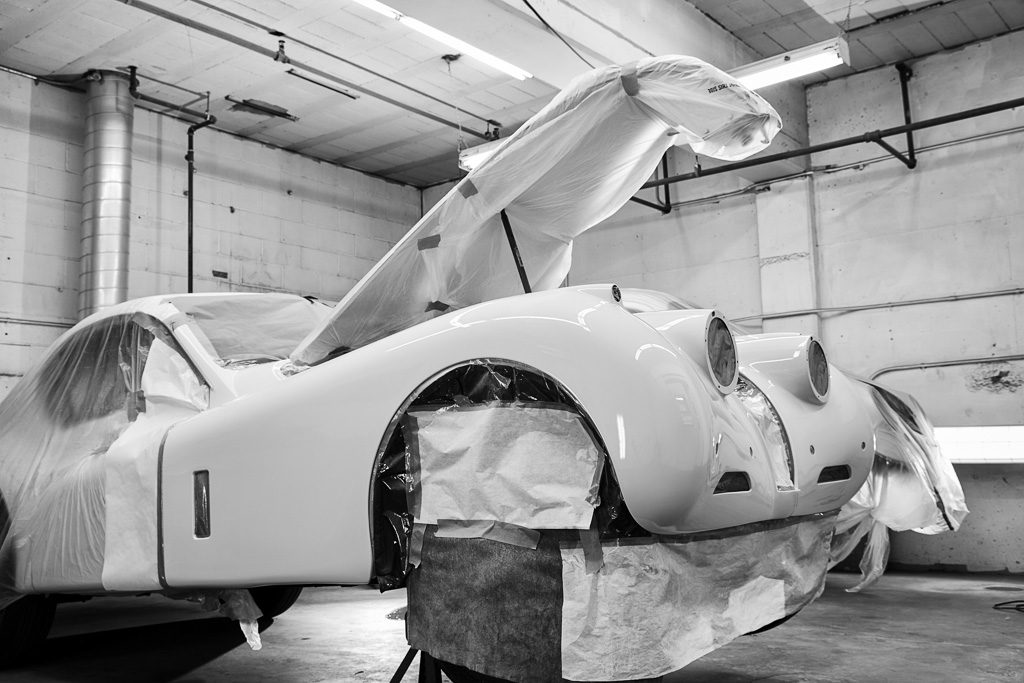
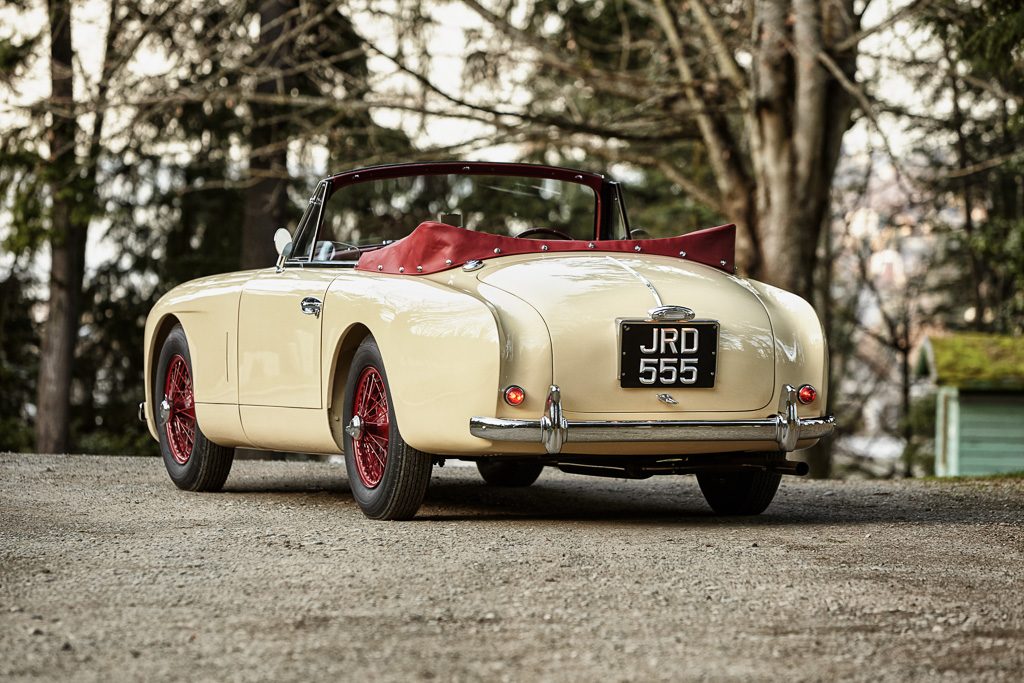
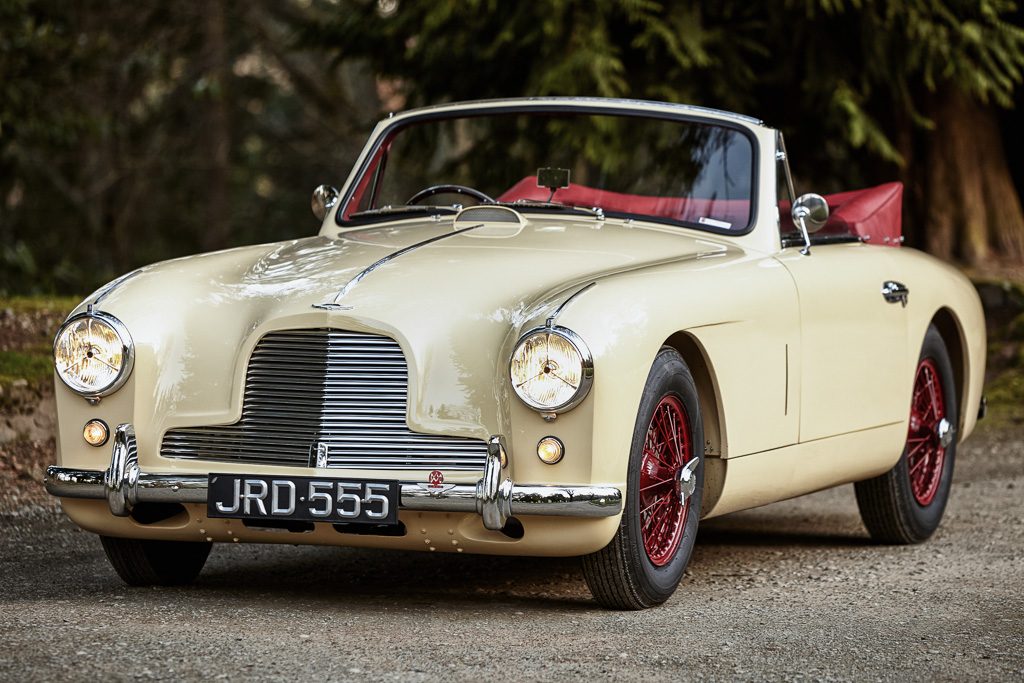
Third, is the 1954 Aston Martin DB2-4 drop head. After several hundred hours of alloy work, the substrate was conversion coated, etch primed, then several sessions of high build primer applications utilized during the flatting process. The entire carbody was then sealed, then topcoated with clearcoated 22-Line Glasurit Ivory paint. Every surface, inside and out, was painted to a very high standard befitting an Aston of this stature. Total cost of all paint materials to date is $4057 to the customer.
The ever increasing cost of paint materials is staggering, due largely to continually changing VOC (volatile organic compounds) levels and environmental laws. There is rarely a delivery of paint supplies to my shop that does not reflect an increase of costs. The cost of a pint (the least amount you can buy) of normal paint to perform a spray-out for customer approval of color is between $75 and $100. An amazing fact considering the cost of top coats of the first car I performed a complete respray on in 1979, a 1948 Chevrolet 5 window pick-up, was $32.00, purchased at the local Napa store in Glendive, Montana.
Triumph TR6 Door Rebuilding
Triumph TR4 thru TR6 door rebuilding from a bare shell is much easier if the various steps are done in a logical manner. The purpose of this post is to illustrate the steps, in the order that makes assembly the easiest.
TR6 (late) RH door shell. First step depicted is the door structure with the outer handle, lock, and door latch already installed.
Trim the new upper door crash pad as nec’y. There is always extra material on both ends, as well as the inside flange under the inner fuzzy seal. Trim this area to the bottom of the flange. Locate position with tape as pictured. Once the contact cement is brushed on, there is no fore and aft movement of the pad. It’s initial position is important. Glue the inner seal flange first, then after that sets up, glue the material beneath the door panel. It is not necessary to glue the entire contact surface as it makes it nearly impossible to make minor location corrections.
Install the door glass channels next, locating the rain shield, if still present, before bolting up the forward channel. Leave the rear channel loose with no fasteners at the top end, and all other fixing bolts loose. You will see why later.
Install the door glass sliding it down into the channels, and leave it resting on the bottom of the door. This leaves ample space to install the upper inner and outer door glass seals. With the seals installed, it is very difficult to install the glass without damaging the seals.
Install the inner fuzzy seal clips on the flange with a hook tool as shown. Space the seven clips equally. Be careful not to dislodge or wrinkle the crash pad on the flange when installing the clips. If the contact cement is fully dried, the crash pad should not roll up under the clip. Note that the clip pictured is rearmost, and is installed as far aft as the door skin allows.
Install the inner fuzzy seal into the clips. Support the bottom of the clip with your hook tool, and snap the seal onto the clip. Be careful to match the contour of the door with the seal as pictured.
Shot of top of door, with crash pad and inner seal installed.
Fit up the outer glass seal to the door to match contour, and trim the excess metal material from forward edge as shown so it fits into the glass opening. It is always too long at the forward edge. Leave the upper rubber in place for now. Trim that back after the seal is installed for a neat, uniform appearance.
Fit up the outer seal into the opening after laying a piece of tape on the upper door skin as pictured. Make a mark on the tape to reference the location of the clips on the door seal in relation to their place on the flange. Install the seven clips in those locations on the flange, then install the outer seal into the clips already correctly located in the same manner as the inner fuzzy seal, pressing the seal down firmly onto the clips whilst supporting the clip with the hook tool. Make sure the contour of the seal matches the upper door skin. The outer seal is more difficult to install than the inner. Just make sure the seal is fully seated along the upper door skin, and the retaining clips pulled up onto the seal fully.
The door with both inner and outer door glass seals installed. Very neat and clean in appearance. You can now see why I install the door glass into the door first. The door glass will not drop down into the door with both seals installed, and the seal clips are difficult to install with the door glass fixed to the regulator. Now install the upper fixing bolts on the rear glass channel. You can see the rearmost outer seal clip is trapped by the channel, and difficult to install if the channel is bolted up tight prior to installing the clips..
Install the regulator into the door after propping the glass up out of the way, locating the fixing bolts thru the rain shield. It is much easier to install the regulator onto the glass and onto the inner door if you crank the regulator around to match the geometry of it’s normal installed position before trying to engage the regulator arms onto the glass channel. The late TR6 doors with the inner strengthening channel really restricts the space, but is much easier if the geometry is right first.
Install the lower window stop bracket engaging the wire ends around the lower glass channels. Lower the glass to check bottom travel, then fix the stop. Find a not too snug spot in locating the lower fore and aft location of the glass channels to allow free movement of the glass. Not too tight, not too loose, then fix the lower channel bolts. Install the door remote as pictured. Note the anti-rattle pad glued to the inside door under the remote link. The factory used underfelt type material. This car was missing the original pads, so a dense cell foam strip was trimmed and glued into place.
Shazzam. Door assembly complete with the exception of inner handles. (The inner door handle installation warrant another complete procedure). Do not feel bad if a door takes you all day and your hands and lower arms are bleeding from several places. A full door rebuild takes me over 3 hours each side, and I have rebuilt many TR doors.
1965 MGB Roadster
1965 MGB Roadster. Brought in for disassembly, strip of old finishes, body and paint. Very nice original car.
1965 MGB. Old paintwork and body filler removed. Ready for minor bodywork, flatting, and respray.
1965 MGB Roadster. Respray complete. Ready for color sand and reassembly.